

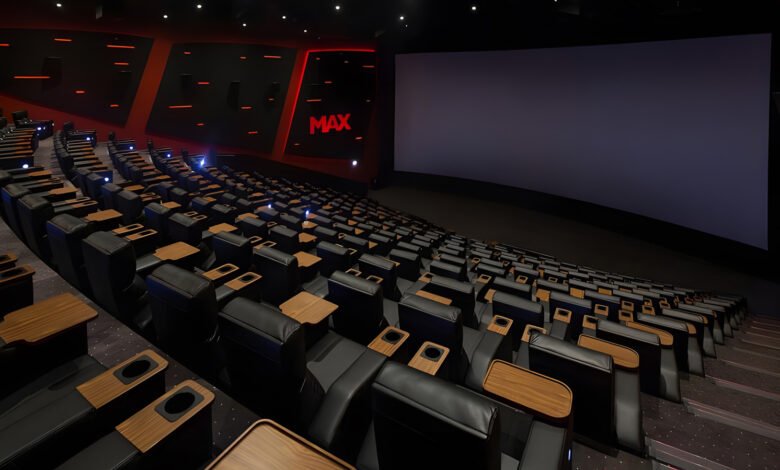
Shooting an IMAX movie is an expensive endeavor that most filmmakers avoid, at least for now.
IMAX movies are dramatic experiences: big, bold, bright, with a sense of scale that’s much bigger than the average cinema screen. It’s a demanding process for filmmakers to create IMAX movies, requiring specialist equipment and a big budget.
Only a select few, like Christopher Nolan, have fully embraced the standard, with Nolan’s latest movie, The Odyssey, being one of the few to be filmed entirely on IMAX film. IMAX films deliver the goods — but if the format is so impressive, why aren’t more movies being shot in IMAX?
IMAX film has always been difficult to shoot
IMAX isn’t a new development, but it wasn’t designed with Hollywood cinema in mind. The first IMAX film, Tiger Child, was a Japanese short film released in 1970, with a later film, North of Superior, used in 1971 to more widely showcase the format. Its early years were dominated by documentaries, educational films and more short films to showcase IMAX’s huge screen size and high-resolution detail.
It’s not a platform that has ever seen a huge amount of adoption. Shooting an IMAX film has always required bigger and more cumbersome equipment. Modern IMAX film cameras are still larger and heavier than their traditional counterparts, and are louder to operate, adding extra difficulty on a film set where clean audio is a necessity. Their size and general bulkiness make them an impractical option for a lot of scenes. You’re not taking an IMAX camera with you if you’re filming on a small set, or if you need to film fast-paced action scenes, for example.
IMAX film itself is big and bulky, too. The 65-70mm size is much larger than traditional 35mm film, which gives it its impressive quality, but the camera physically can’t hold as much. That means regular film changes, a problem faced by Tom Holland on The Odyssey film set, who mistook the regular three-minute stoppages for film changes as a critique on his performance. Given the filming schedule for a Hollywood movie, extra stoppages like this simply add to the cost.
So, to film in IMAX, you’ll need specialist cameras that are bulky and harder to film with, require expensive film, and can lead to a longer film schedule. Even newer IMAX cameras, like the quieter 65mm IMAX Keighley camera used in The Odyssey, are still bulky to operate, weighing almost 400 pounds. Most movie theaters can’t show true IMAX screens in the original 15/70 format, so the true experience is reserved to a much smaller set of cinema screens. Some digital cameras are now IMAX-certified, but these don’t deliver the same quality as traditional 15/70 IMAX film.
As a result, most filmmakers have chosen to use IMAX selectively. The Dark Knight, another Christopher Nolan movie, was the first major Hollywood film to use IMAX for some of its scenes, reserving it for parts of the film that he believed its impressive detail would have the biggest impact. Nolan, however, is a rarity. Most producers aren’t willing to accept the trade-offs and additional costs, while others more typically go down the IMAX-certified digital route instead.
Digital cinema made shooting movies easier and cheaper
If we count Nolan as one of IMAX’s biggest cheerleaders, his decision to partially film The Dark Knight using IMAX cameras in 2008 is an interesting contrast to how filmmaking was shifting in this period away from traditional film. Hollywood wasn’t going for bigger IMAX films, but instead moving to digital production.
It’s not hard to see why. Traditional filmmaking requires physical film, larger cameras, longer takes and more extensive post-production to edit and cut down. You eliminate almost all of these stress points with digital film cameras: quieter, smaller, easier to handle. If you compare and contrast to IMAX, which we’ve already mentioned as being even bigger and louder than traditional 35mm film cameras, then IMAX already felt antiquated in 2008, let alone in 2026 for most directors.
Digital film production became the obvious and practical choice for Hollywood very quickly. Slumdog Millionaire, released a year after Nolan’s Dark Knight in 2009, won the Oscar for Best Cinematography in the same year, the first digitally-shot movie to do so. The industry hasn’t looked back. That left IMAX as an experimental and niche option for most filmmakers. Nolan, a traditionalist who uses physical 65mm IMAX film cameras, is an enthusiast for the format that few else are, believing that IMAX film offers the highest quality of any film format available today.
“Filmed for IMAX” movies are the alternative. Tom Cruise is one of the most recognizable names making movies like this, with Mission Impossible: The Final Reckoning filmed using Sony IMAX-certified digital cameras. They’re designed to capture a bigger image area to fill IMAX’s expanded 1.90:1 size, with quality good enough to create movies that can still take advantage of IMAX cinema screens.
Unlike Nolan’s movies, however, The Final Reckoning isn’t true IMAX. It can’t scale to the full IMAX screen, with an aspect ratio smaller in size. Other movies, like Ant-Man and the Wasp, only manage to hit 1.90:1 for a portion of each film: at least 45 minutes is the aim for it to be given the ‘Filmed for IMAX’ tag. You also have ‘Experience in IMAX’ movies which are remastered from their original widescreen format to fill the bigger size but lacking the same IMAX quality.
IMAX is too niche and difficult to justify for most productions
A movie, filmed truly for IMAX cinema screens, is visually impressive, but out of reach for most filmmakers. You can consider all of the impracticalities, but cost trumps them all.
IMAX is a very expensive format to film on. It requires specialist cameras, film and operators trained to use it. Filming with it takes longer, and post-production longer still. Once it’s filmed, it can only be experienced in its true format in just 41 movie theatres worldwide. For studios, you’re paying more to produce a movie that only a fraction of your likely audience is going to be able to see at its very best.
Digital cameras have narrowed the gap somewhat. IMAX-certified cameras, like the Sony Venice cameras used on Mission Impossible: The Final Reckoning, let filmmakers create movies that can take full advantage of an IMAX cinema screen, but “Filmed for IMAX” isn’t the same as shooting on IMAX film. Digital cameras have closed the distance, but the film used in traditional IMAX filmmaking still captures far more detail.
IMAX is the premium filmmaking format. Big showstoppers like The Odyssey are rare and expensive to film, and rare because they’re expensive to film. Most blockbuster filmmakers will choose normal digital filmmaking instead, getting their movies out into more theaters with still-very-good cinema quality so that more people are able to enjoy them.
Source: www.engadget.com